

During his campaign for the U.S. presidency in 2024, Donald Trump made a commitment to support the oil sector with various initiatives, promoting the motto: “Drill, baby, drill.”
However, the actions he has taken since resuming office have, in many respects, produced contrary results. While oil corporations are experiencing significant profit surges, Trump’s imposition of tariffs on China and the price volatility stemming from the conflict he initiated with Iran in February have prompted several nations to explore the advantages of renewable energy.
“This is Economics 101. Increasing the price of a commodity and making it more unpredictable will lead consumers to seek alternatives,” stated Kingsmill Bond, director at the global energy think-tank Ember. “That’s precisely what has been occurring.”
A clear illustration of this trend is seen in the electric vehicle sector. A report published last month by the International Energy Agency (IEA) revealed that the worldwide EV market experienced a resurgence in the second quarter of this year, despite an overall decline in car sales.
Data gathered by Ember indicated that exports of electric vehicles from China, the leading EV manufacturer, surged between March-May 2025 and March-May 2026, with increases of 117 percent in Brazil, 127 percent in South Korea, 175 percent in Australia, and 220 percent in Italy.
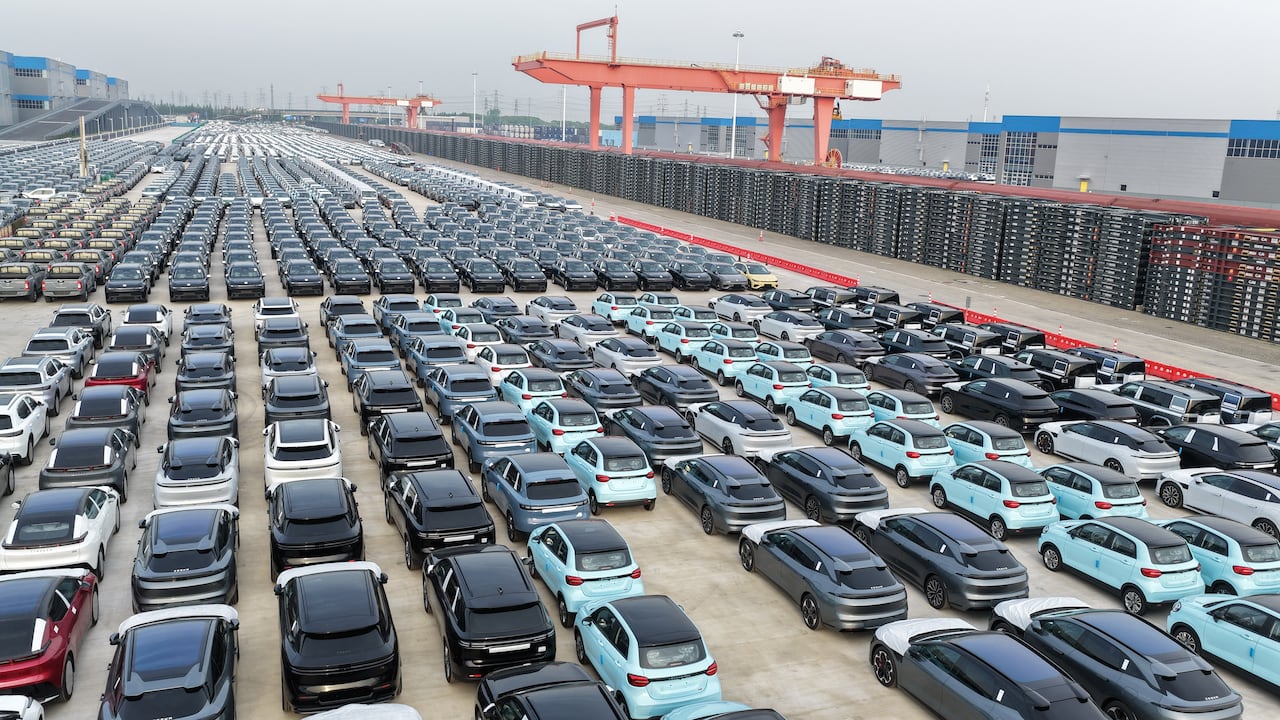
Chinese-manufactured vehicles, including Zeekr models, await shipment for export at the Port of Taicang in Suzhou, China, on April 27, 2026. (AFP/Getty Images)
Nations are also modifying their energy infrastructures to adapt to this new landscape. Earlier this year, the largest energy provider in the U.K. reported a 50 percent year-over-year increase in solar panel sales, while escalating energy expenses in Asia have spurred interest in rooftop solar installations. Even as Canada aims to bolster pipeline investments, it has introduced a nuclear strategy that intends to double the electrical grid’s capacity by 2050.
“Electric vehicles, batteries, and solar panels are flying off the shelves because people are seeking alternatives,” Bond remarked.
Nations Pursuing Energy Independence
According to Bond, the larger energy transition has been ongoing for some time. In its 2025 review, for instance, Ember noted that renewable sources accounted for over one-third of global electricity generation, surpassing coal power for the first time in a century.
However, the conflict in Iran has provided a fresh impetus for people worldwide to consider clean energy solutions.
In response to U.S.-Israeli military actions that commenced in February, Iran blocked the passage of one-fifth of the global oil supply through the Strait of Hormuz. As oil prices surged to nearly $120 per barrel, European Commission President Ursula von der Leyen described it as “the second fossil fuel crisis within just a few years,” following Russia’s invasion of Ukraine in 2022.
“One thing these events are making clear,” she stated, “is that we are paying an exorbitant price for our excessive reliance on fossil fuels.”
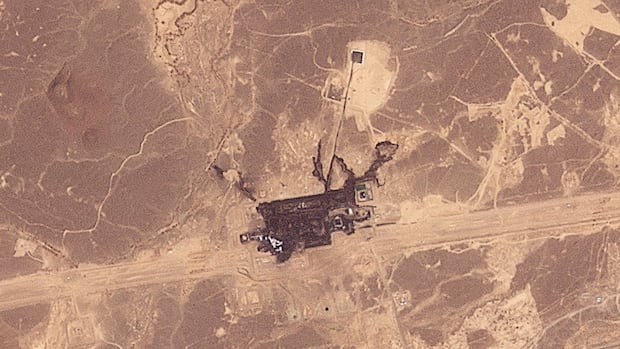
Concerns about global oil supply are rising following a drone strike from Iraq that resulted in Saudi Arabia closing its East-West pipeline facility in the Hejaz region.
This appears to be a lesson that many countries, especially in Asia, have internalized.
For instance, Thailand has shifted towards solar energy due to escalating natural gas prices. Shortly after the onset of the Iran conflict, the Philippines declared an energy emergency and its government issued executive orders to expedite grid connections and numerous initiatives aimed at generating 1.4 gigawatts of renewable energy (sufficient to power approximately one million homes).
From an ecological standpoint, the responses to the energy disruptions caused by the Iran conflict have not all been advantageous; coal consumption is expected to reach a record high this year, according to the IEA. Several nations that depended on natural gas have been compelled to revert to coal as their primary alternative for electricity generation, owing to shipping limitations on liquid natural gas (LNG) via the Strait of Hormuz.
However, in some instances, the reactive switch back to cheaper and more polluting coal is occurring alongside a proactive transition towards cleaner energy. Both Pakistan and the Philippines have increased their coal usage to mitigate some of their gas dependency, but Pakistan’s solar transition has been in progress for several years, with the share of solar energy in its electricity mix nearly tripling from 2023 to 2025, according to Ember.
Despite the fact that most of its LNG supply originates from Qatar, Pakistan’s Power Minister Awais Leghari highlighted how the increase in renewable energy would shield the nation from disruptions in the Middle East, stating to Reuters, “Pakistan is not expected to invest in any energy source that could jeopardize its energy security.”
Erica Downs, a senior research scholar at Columbia University’s Center on Global Energy Policy in New York, noted that electrification naturally enhances energy independence.
“What nation wouldn’t strive for greater self-sufficiency in energy production and supply?”
A study led by Montreal-based Northern Light Capital Partners found that by March 30, shortly after the Iran war began, over 150 nations had announced intentions to invest in clean energy for energy security purposes.
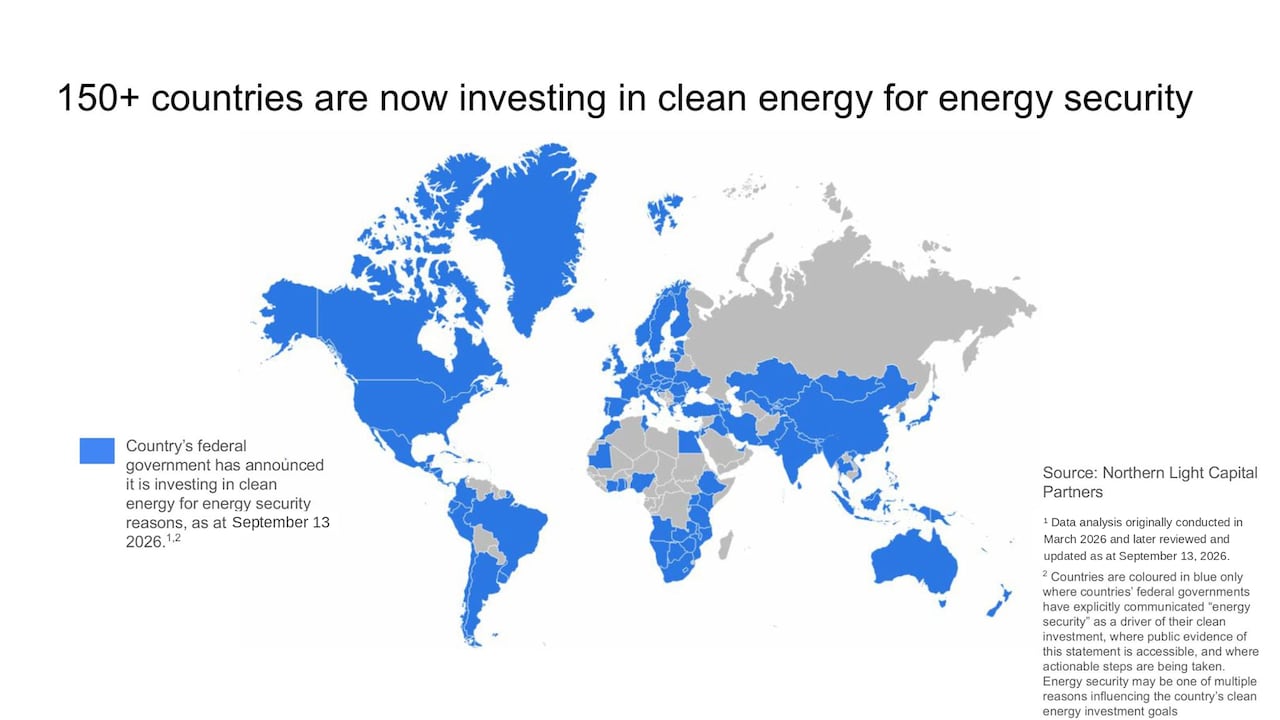
A map illustrating all the countries that committed to invest in clean energy as a measure of national energy security. (Northern Light Capital Partners)
“The tariffs imposed by the U.S. administration introduced erratic fluctuations into the clean energy supply chains,” stated Joanna Klimczak, founder and CEO of Northern Light Capital Partners, in an interview with CBC News. “Conversely, the conflict in Iran has served as a significant catalyst for global clean energy investment.”
‘A Long-Term Commitment’
The narrative of the renewable energy transition cannot be fully understood without acknowledging China’s significant role. The country has been rapidly manufacturing solar panels, wind turbines, and electric vehicles.
In the initial phase of his second term, Trump imposed substantial tariffs on various Chinese imports, including solar panels. Consequently, many of these products were redirected to Africa, assisting nations such as Rwanda, Senegal, Ivory Coast, and even oil-rich Nigeria in reducing their dependence on fossil fuels like diesel.
“The cost of equipment decreased when the trade conflict began. The Chinese were eager to offload inventory,” remarked Fawen Nyakudya, managing director of PFN Solar Systems in Zimbabwe, to a German news outlet.
Klimczak noted that, due to decades of investment in clean technology manufacturing, China is poised to meet global renewable energy demand at a crucial time.
Downs emphasized that unlike past oil crises in 1973 (triggered by the OPEC embargo), 1979 (resulting from the Iranian revolution), and 1990 (during the first Iraq war), “there are technologies available today that offer alternatives to fossil fuels that previous generations did not have.”
These alternatives are not only accessible but are, in many instances, more cost-effective to implement than conventional fossil fuels.
According to the International Renewable Energy Agency, since 2010, the costs associated with solar installation have decreased by 87 percent, onshore wind costs by 55 percent, and battery storage expenses have plummeted by 93 percent.
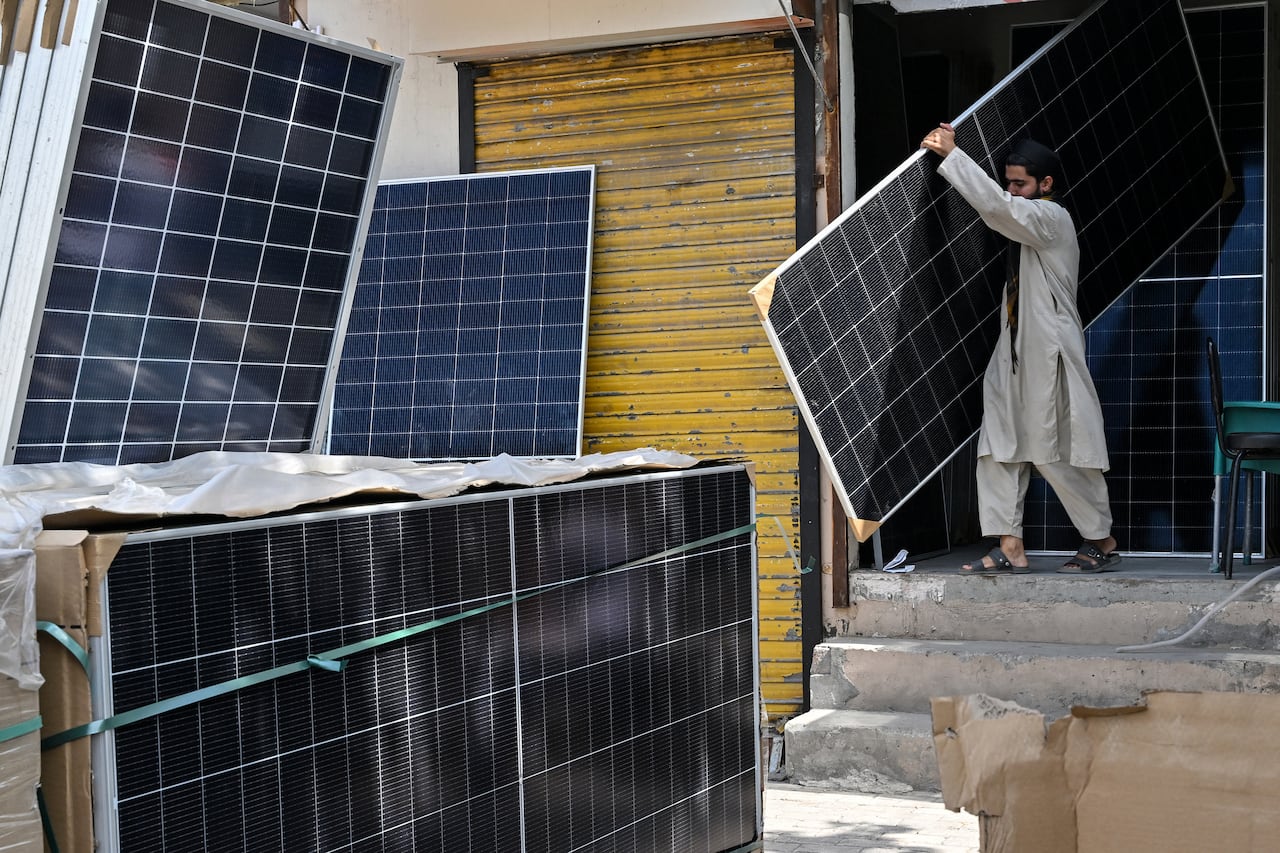
A worker transports solar panel plates at a market in Lahore, Pakistan, on June 12, 2026. (Arif Ali/AFP/Getty Images)
Downs indicated that it is “still too early to determine” whether Trump’s trade and military strategies have left a lasting mark on the global energy transition. A pivotal question remains whether oil prices escalated sufficiently “to instigate a more enduring shift towards clean technologies.”
On Monday, Brent crude prices reached $109 per barrel, the highest level since May. Nevertheless, oil prices have not yet achieved the lofty figures some analysts anticipated earlier this year.
“Oil did not reach $200 [a barrel] — it didn’t even touch $150,” Downs noted. “Some observers have raised the question of whether it may not be beneficial in the long run that prices did not soar to those extreme levels.”
According to Bond, the energy transition is inevitable, and events like these hasten its progress.
“This is a marathon, not a sprint. The transition from fossil fuels to alternatives has been ongoing for a considerable time,” he stated. “And each time a shock occurs, it encourages individuals to accelerate that change slightly.”
Tag: rewrite-pending