

On Wednesday, a court supported by the European Union found former Kosovo president Hashim Thaçi guilty of four counts of war crimes committed during the conflict for his country’s independence from Serbia, resulting in a sentence of 25 years in prison.
Thaçi stepped down from his position nearly six years prior to confront the allegations against him. The Kosovo Specialist Chambers’ panel found him guilty of murder, torture, cruel treatment, and arbitrary detention.
At 58 years old, Thaçi retains the ability to appeal the ruling, just as prosecutors can. He faced trial alongside three other former leaders of the Kosovo Liberation Army (KLA), who engaged in combat against Serbian forces during the war from 1998 to 1999.
Dressed in a suit and tie, Thaçi remained silent as Judge Charles Smith announced the verdict.
This ruling marks a significant setback for a figure once celebrated by Western officials, who included him in peace discussions in France in 1999 and viewed him as a pivotal leader for Kosovo’s independence.
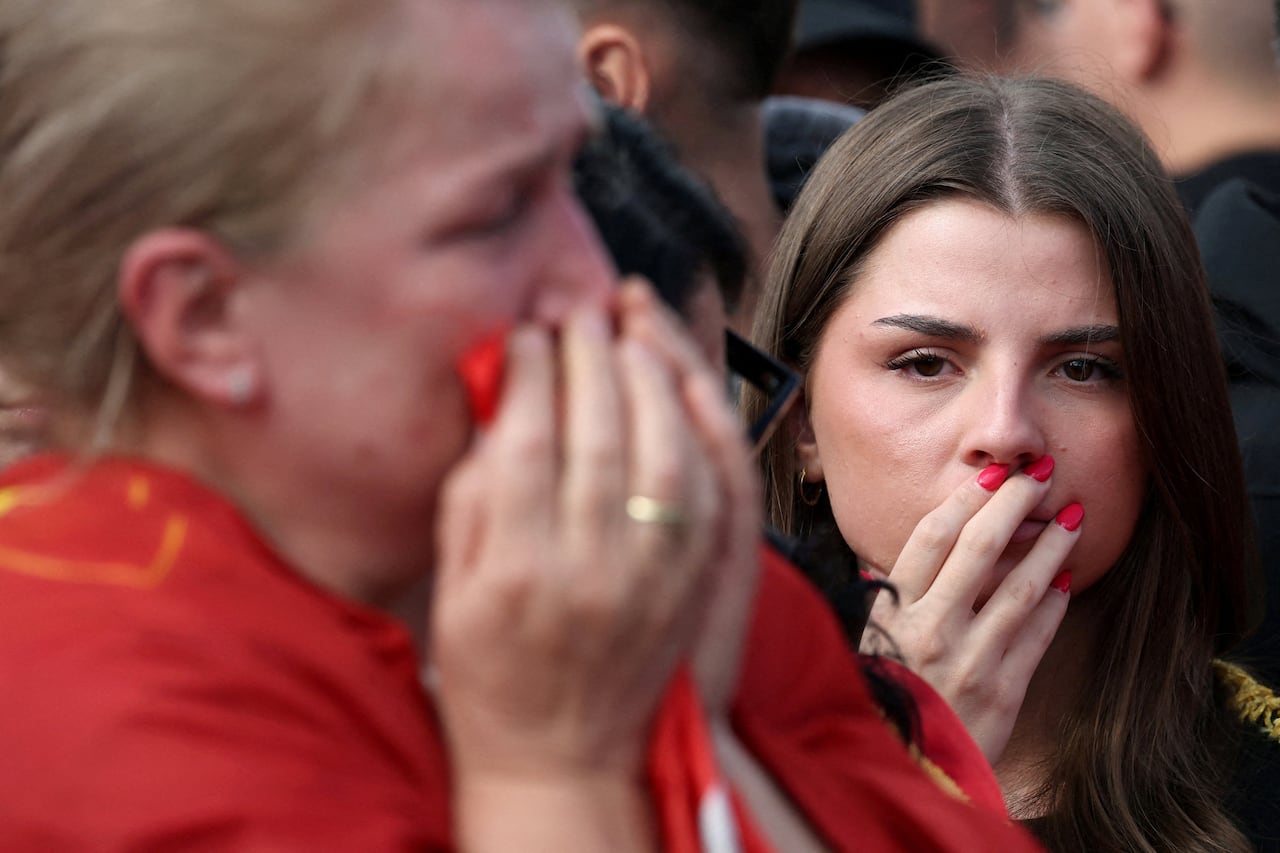
Supporters of former Kosovo president Hashim Thaçi react after he was found guilty of war crimes by the Kosovo war crimes tribunal. (Omar Havana/Reuters)
The KLA leaders currently on trial are viewed as national heroes by many. In Pristina, the capital, thousands gathered to witness the announcement of the verdict on a large screen, expressing shock at the outcome. Some began chanting “UCK,” the Albanian acronym for the Kosovo Liberation Army that Thaçi once led prior to entering politics.
A supporter named Bekim Fetahu described the verdict as “a catastrophic decision.”
“The judges have equated the victims with the aggressors,” Fetahu remarked.
Outside the courthouse in The Hague, hundreds of Thaçi’s supporters awaited the announcement.
Acquitted of crimes against humanity
Judge Smith clarified that the trial did “not question the legitimacy of the Kosovo Liberation Army” or its goal of achieving independence for Kosovo, which was then a Serbian province.
However, the American judge noted that Thaçi “leveraged his position, leadership, authority, and reputation” to incite criminal acts.
The court determined that Thaçi and his co-defendants aimed at political adversaries and civilians perceived as collaborators and traitors during their tenure in the KLA.
“In reality, there is no evidence that the victims in this case were spies or collaborators,” Smith stated, explaining that merely having “Serbian friends or employment in Serbian companies was sufficient to classify them as collaborators” with the enemy.
All four KLA members were acquitted of six charges related to crimes against humanity, as the judges concluded that prosecutors did not establish that the crimes occurred as part of a widespread and systematic assault on civilians.
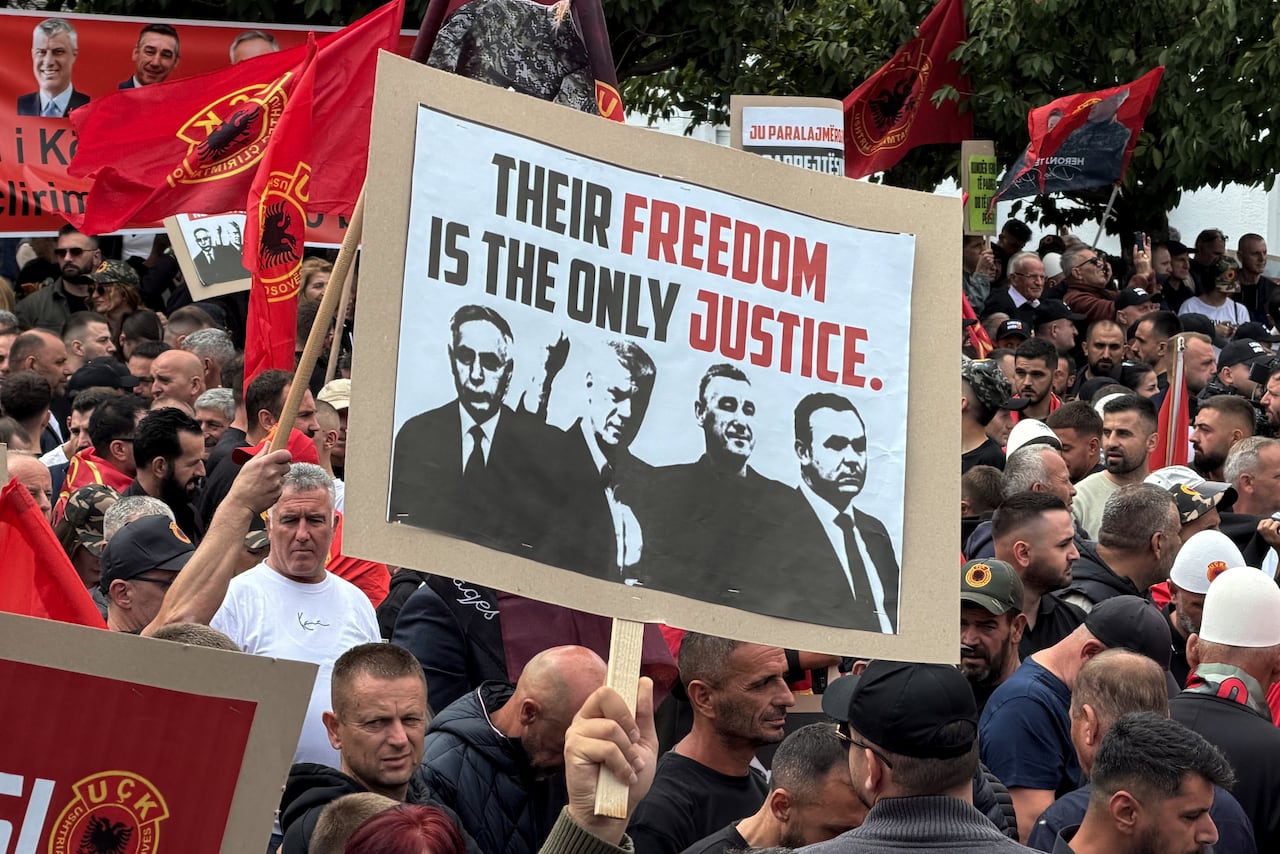
Demonstrators are shown Saturday in Pristina, with one holding a sign depicting Thaçi and the other defendants, Kadri Veseli, Rexhep Selimi and Jakup Krasniqi. (Zana Cimili/The Associated Press)
As the trial concluded in February, Thaçi told the judges: “Throughout my life, I have stood with the people of Kosovo, advocating for freedom, life, and dignity. My actions have always been guided by Western ideals of democracy, equality, and justice.”
Prosecutors sought a maximum sentence of 45 years for Thaçi and the other defendants, Kadri Veseli, Rexhep Selimi, and Jakup Krasniqi.
According to the prosecution, the men targeted political rivals and civilians deemed as collaborators and traitors during their service in the KLA. All the defendants denied the accusations.
Veseli received an 18-year sentence, Selimi was sentenced to 13 years, and Krasniqi was given 25 years in prison.
“This is a devastating ruling for Kosovo, for our people, and for our liberation struggle,” stated Kosovo Foreign Minister Glauk Konjufca, denouncing the verdicts.
Over the weekend, thousands also gathered in Pristina to show support for the four men. Protesters filled a central square in the capital, many waving red and black Albanian flags.
Portraits of the four former KLA leaders have been displayed throughout the city, accompanied by a large digital countdown clock leading up to Wednesday’s verdicts.
In Serbia, President Aleksandar Vucic announced he would address the nation later on Wednesday.
Separate trial on intimidation charges
The personnel at the EU-backed court primarily consists of international staff due to concerns regarding the safety and security of witnesses. In 2022, the court convicted two leaders of a Kosovo war veterans’ association for intimidating witnesses by leaking confidential documents.
Thaçi is also set to face a separate trial concerning intimidation of witnesses, which will commence later this month.
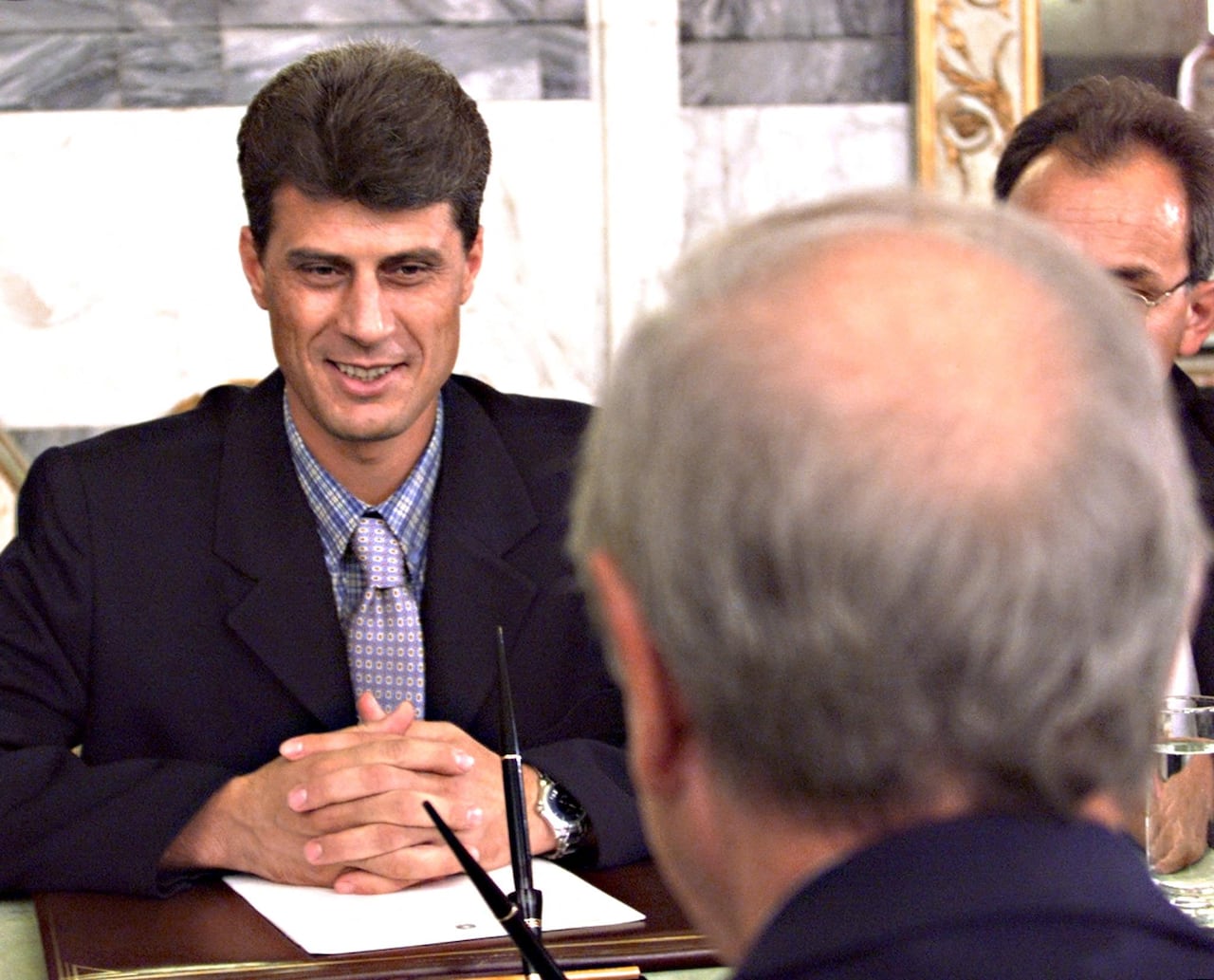
Thaçi is shown at a Sept. 3, 1999, meeting with officials, including Italian Foreign Minister Lamberto Dini. Thaçi was among the KLA figures involved in peace talks at the time. (Gabriel Bouys/AFP/Getty Images)
He was a student who returned from what he called political exile in Switzerland to join Kosovo’s fight for independence. He earned the nickname “the Snake” for his skill in avoiding capture by Serb forces during the conflict.
After the war, Thaçi rose to power in politics, but he resigned as president to confront the legal proceedings in The Hague.
The majority of the 13,000 casualties in the Kosovo war were ethnic Albanians. A 78-day NATO airstrike campaign targeting Serbian forces ultimately ended the conflict, displacing approximately one million ethnic Albanian Kosovars from their homes.
In 2008, Kosovo proclaimed its independence from Serbia, a move that Belgrade continues to contest. Relations between Kosovo and Serbia remain strained, despite years of negotiations facilitated by the European Union and supported by the United States.