

CONTENT WARNING: This article includes information about violence towards children and a suicide attempt.
The testimony phase wrapped up on Wednesday in the trial of Lindsay Clancy, a mother accused of strangling her three young children, shedding light on postpartum mental health challenges.
Closing statements are set to commence Thursday, followed by jury deliberation.
Lindsay Clancy, aged 36, has entered a plea of not guilty by reason of lack of criminal responsibility, as her defense team argues she was in the grips of postpartum psychosis at the time she tragically took the lives of five-year-old Cora, three-year-old Dawson, and eight-month-old Callan Clancy at their residence in coastal Duxbury, Massachusetts, in January 2023.
This rare mental disorder is associated with the stress, sleep deprivation, and hormonal fluctuations following childbirth.
Expert Testimony from FBI Forensic Psychiatrist
The prosecutors allege that Clancy premeditated the killings and was aware her actions were unlawful.
Throughout the fifth week of the trial, Clancy opted not to take the stand, while her defense presented 10 witnesses, including acquaintances and family members, and the prosecution summoned over 70 witnesses, including her former spouse.
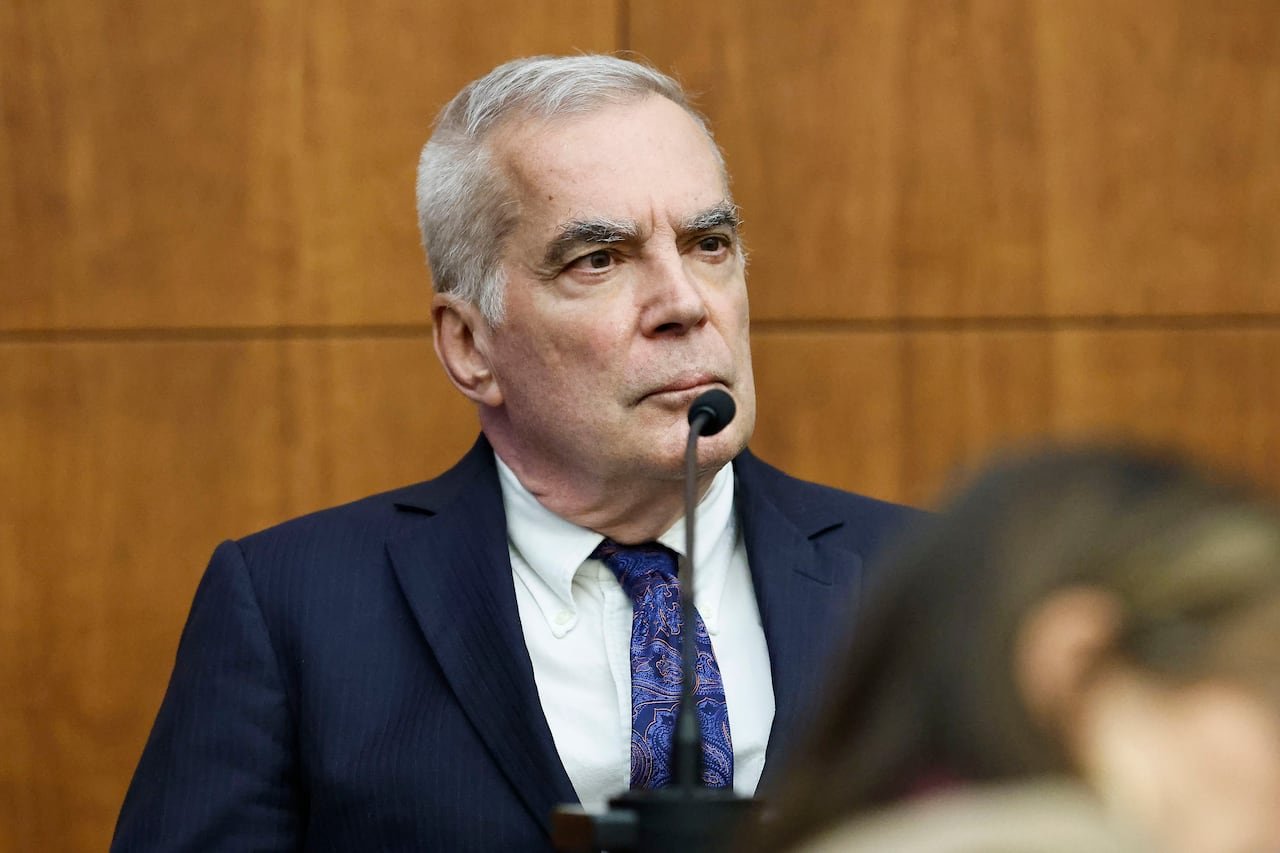
During his final rebuttal testimony for the prosecution, a forensic psychiatrist from the University of Virginia and a senior psychiatrist with the FBI’s Behavioral Analysis Unit expressed skepticism towards Clancy’s claim that a voice directed her to harm her children.
Under questioning from Prosecutor Jennifer Sprague, Dr. Gregory Saathoff refuted Clancy’s assertions that the voice guided her on the specifics of the act. Saathoff emphasized that Clancy’s ability to carry out the acts without explicit instructions indicated a level of control over her actions.
The tragic incident occurred in the family’s basement, where all three children were asphyxiated with exercise bands before Clancy made an attempt on her own life while her husband was away on errands on January 24, 2023. Saathoff highlighted Clancy’s independent execution of the acts as indicative of her control and methodical approach to the sequence of events.
“In the brief period that Miss Clancy was alone at home, it was crucial for her to act swiftly, systematically, and decisively to carry out these acts and her subsequent suicide attempt,” he stated.
During earlier testimony, Saathoff noted discrepancies in Clancy’s account, particularly regarding the sudden cessation of the voice post-incident, its consistent presence, and the absence of any prior reports of such auditory experiences to medical professionals. Additionally, Clancy provided conflicting timelines to evaluators about when she first encountered the voice that day.
“The termination of the voice post-action is not typical,” Saathoff remarked. “Such an occurrence is unprecedented in my experience.”